Case study: Sentio

The Project
Sentio is an internet-based Cognitive Behavioural Therapy (iCBT) platform developed by Homewood Health to support individuals dealing with anxiety, depression, and related mental health conditions. The platform delivers evidence-based therapeutic content through interactive, multimedia modules and can be used either independently or with the support of a therapist or coach.
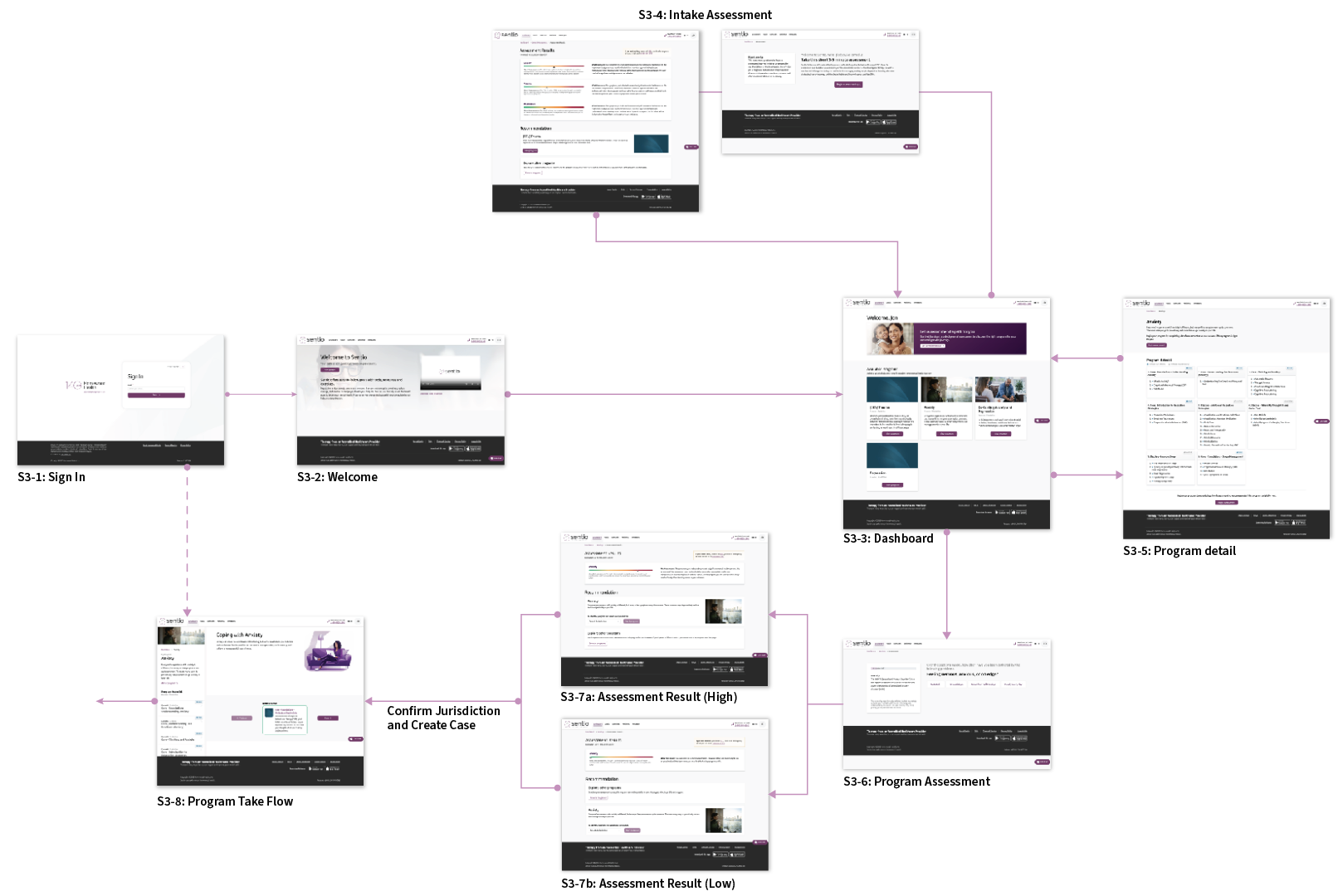
Users begin their journey with a clinical self-assessment that tailors their experience, recommending programs and exercises aligned to their needs. Sentio offers mobile and web access to therapy tools including guided exercises, articles, videos, audio tracks, and dynamic mood tracking. It integrates directly with other Homewood tools, including Homeweb, offering users a unified experience within the broader ecosystem of care.
Role & Contributions
I led the planning, management, and execution of the current Sentio rebuild, playing an essential cross-functional role across UX, design, technical architecture, and stakeholder alignment. Key contributions included:
- Managing timelines, stakeholder communications, and internal team deliverables.
- Leading front-end development and collaborating closely with back-end engineers to maintain code quality and delivery cadence.
- Overseeing UX and design refinement, including wireframes, flows, and final UI design for both web and (to a lesser extent) mobile.
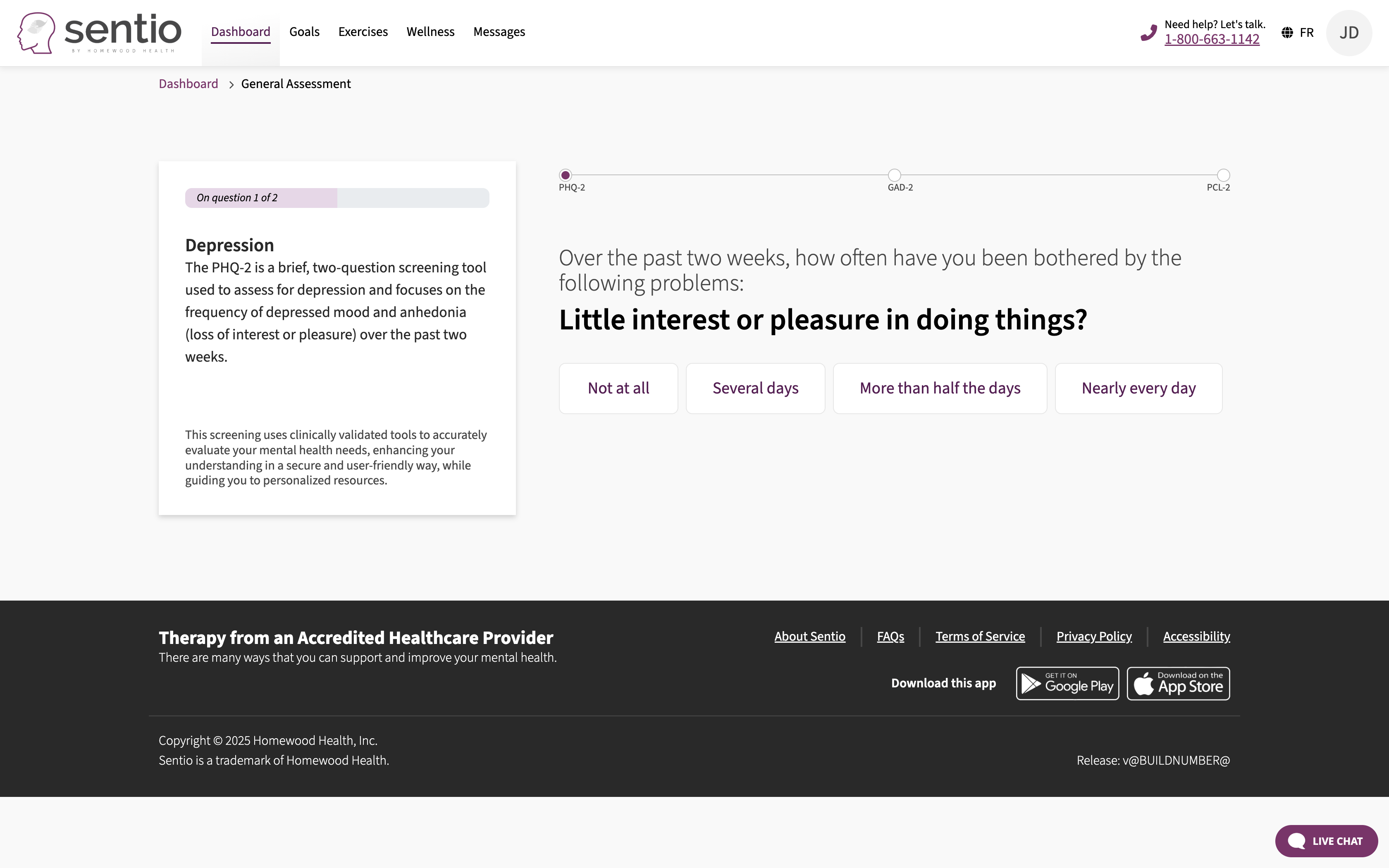
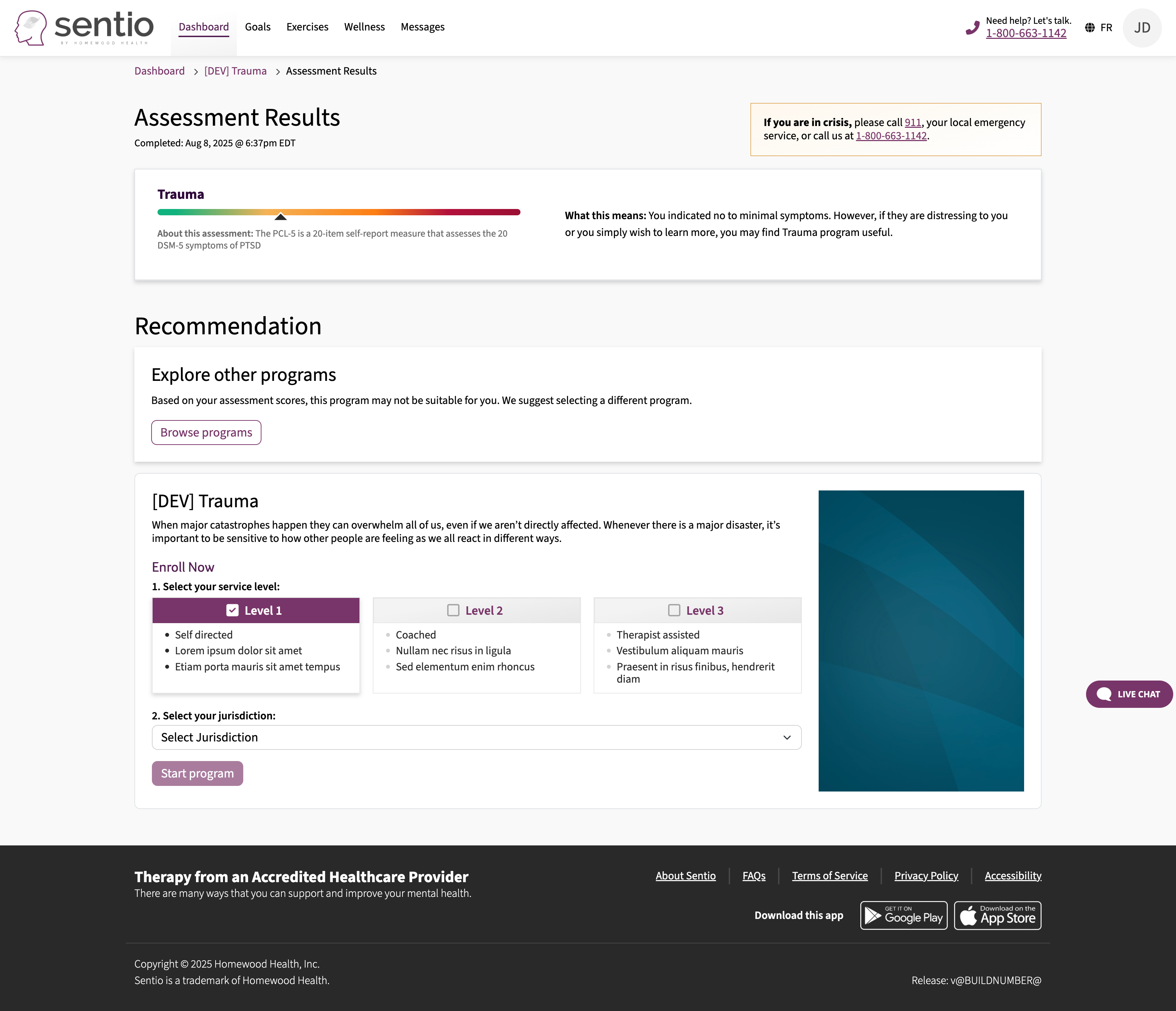
- Redesigning the clinical assessment flow to support both general (e.g. PHQ-2, GAD-2, PCL-2) and issue-specific tools (e.g. PHQ-9, GAD-7, PCL-5), surfacing results and personalized treatment recommendations.
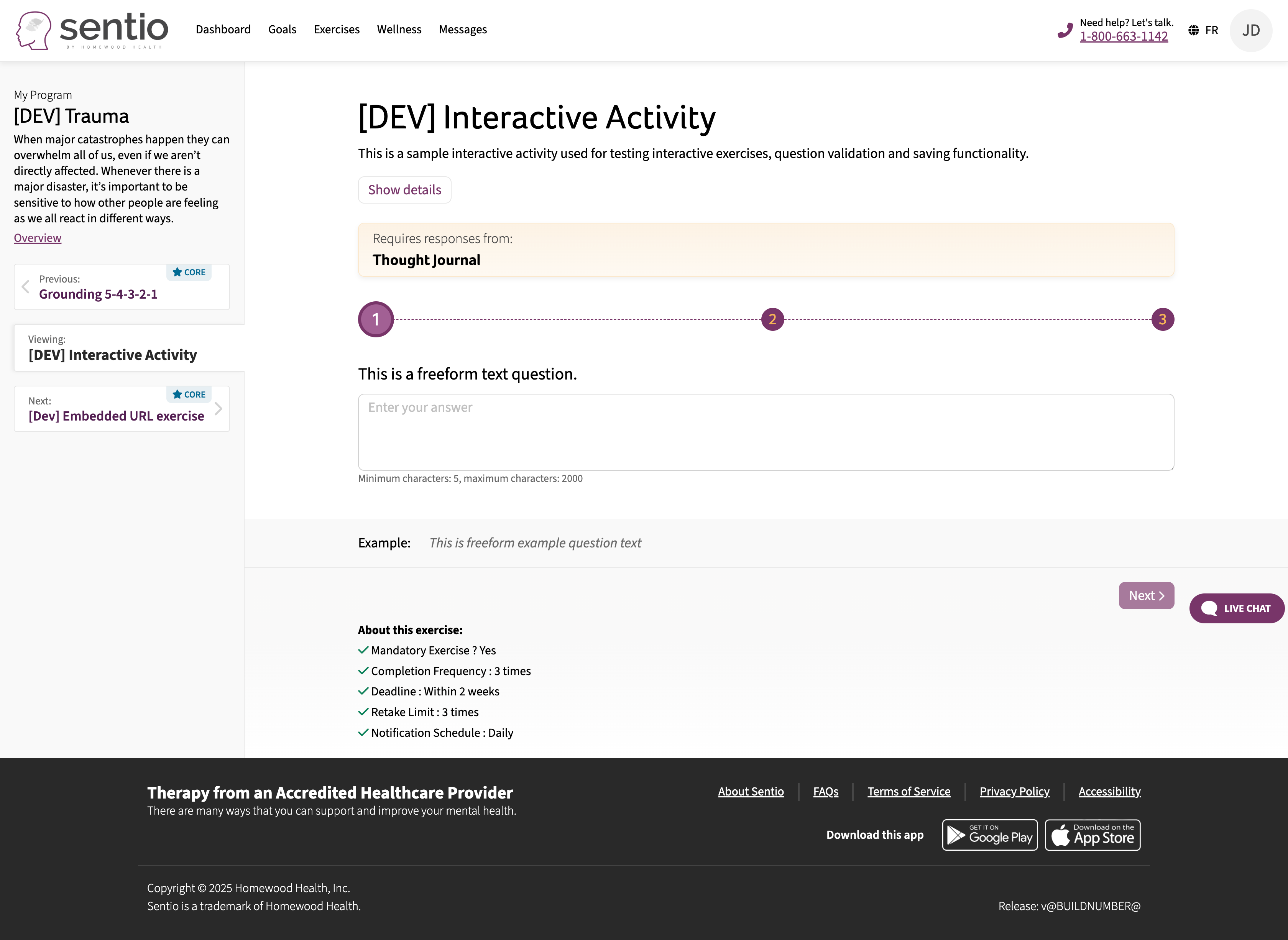
- Designing and building out native exercises and the internal publishing system that allows content teams to author complex therapeutic exercises involving:
- Multiple input types (text, single/multi-choice)
- Completion frequency rules
- Conditional logic between questions
- Notification management and reminders
- Linking across exercises or prior responses
Key Challenges & Considerations
- Crafting a UX that supports flexible but clinically sound workflows across three modes: self-directed, coach-assisted, and therapist-supported.
- Orchestrating complex course flows that include consumable content (articles, videos, audio), downloadable PDFs, third-party integrations (e.g., Storyline), and native interactive exercises.
- Balancing prefilled content, optional vs. required fields, and task dependencies — while protecting the therapeutic alliance and user agency.
- Designing a scalable system for exercise authoring that content teams could own independently of dev teams.
- Maintaining platform security, ongoing infrastructure updates, and stability while iterating rapidly.
Impact & Outcomes
My leadership and hands-on contributions produced substantial improvements in platform capability, team efficiency, and user experience:
- Unified branding and component library across web and mobile created consistency with the wider Homewood product suite.
- Improved publishing tools empowered the content and clinical teams to author and manage exercises independently.
- Reduced dependency on third-party tools (like Storyline) by introducing flexible, in-house native exercises.
- Guided experience design helped ensure users always had a next step — reducing friction and dead ends through tools, reminders, CTAs, and transitions.
- Integrated ecosystem support allowed seamless movement between Sentio and other Homewood platforms like Homeweb.
- Future-readiness: With a shared codebase and architecture, the rebuilt Sentio lays the groundwork for potential unification of EFAP and iCBT offerings — including possible expansion into self-funded access models, reducing reliance on benefit providers.